






 Spanish News Today
 Murcia Today
 Alicante Today


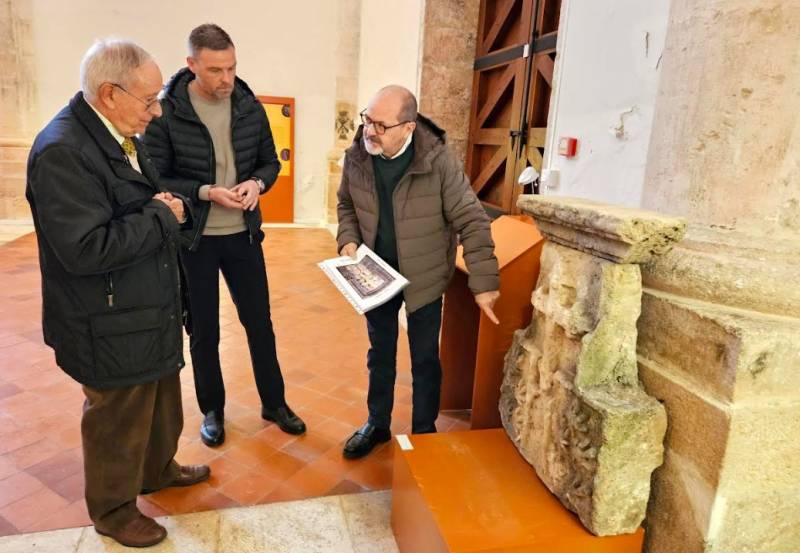 The Town Hall of Caravaca de la Cruz is proud to announce that it has been presented with a heraldic coat of arms made of stone, believed to have been carved in the late 14th century and with signs of being related to the Order of Santiago, the religious knights entrusted with protecting and governing the city at that point in the Middle Ages.
The piece will be stored for the time being in the local archaeological museum, which is a fascinating place to visit in order to gain insights in just a short time into the long and varied history of Caravaca.
The masonry has been studied and found to bear the two shields of the House of Figueroa, leading municipal archaeologist Francisco Brotóns and the official chronicler of Caravaca, José Antonio Melgares, to relate it to Lorenzo Suárez de Figueroa, who was the master of the Order of Santiago between 1387 and 1409.
Family tradition has it that the coat of arms was originally created to be displayed on the Torre Jorquera, one of the towers dotted along the old city wall which surrounded the fortified city of Caravaca until well after the Moors were expelled from the Iberian Peninsula in 1492. However, recent research suggests that it may in fact have been located in the Torre de las Toscas, part of the castle-basilica itself.
(As the city expanded outside the wall in the 16th and later centuries, the defensive structure gradually disappeared, locals using the stonework as part of their own homes and workshops. Click here for a history of Caravaca.)
Until now the coat of arms has been in storage in Marbella, and only now has it been donated to Caravaca by María Luisa Lacal after belonging to the Marsilla family for decades.
Description
The heraldic composition originally measured approximately 69.6 cm in width and 93 cm in height, and in the lower part there are two blazons of the House of Figueroa with their characteristic five fig leaves (one above, the others aligned in pairs beneath). These two blazons are separated by a fleur de lys Latin cross with scallop shells on the crosspieces.
Above them was a roof-piece, and above that a cross. There is no sign of paint having been applied at any stage.
The supremacy of Lorenzo Suárez de Figueroa in the Order of Santiago is associated with the construction of the Torre de las Toscas and a similar decorative piece was documented by researcher González Simancas over the doorway of the tower in the early 20th century.
For more local events, news and visiting information contact the local tourist office (telephone 968 702424) or go to the home page of Caravaca Today.
staff.inc.and
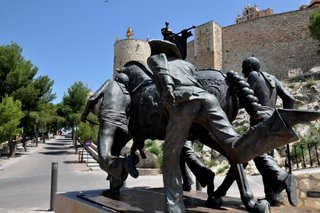 More information about the places of interest which can be visited in the municipality of Caravaca de la Cruz, along with what's on and local news can be found in the Caravaca Today.
Caravaca de la Cruz, in the north-west of the Region of Murcia, is one of only 5 Holy Cities in the Roman Catholic world, a centre of pilgrimage, along with Rome, Jerusalem, Santiago de Compostela and Santo Toribio de Liebana, and is home to the Cross of Caravaca, the Vera Cruz.
The status of Holy City was bestowed by Pope John Paul II in 1998, granting the City a Permanent Jubilee year every 7 years for perpetuity, the first one held in 2003 and the next in 2024.
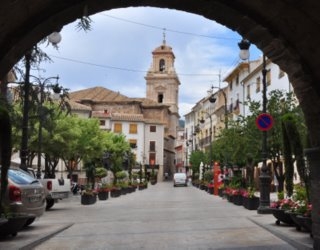
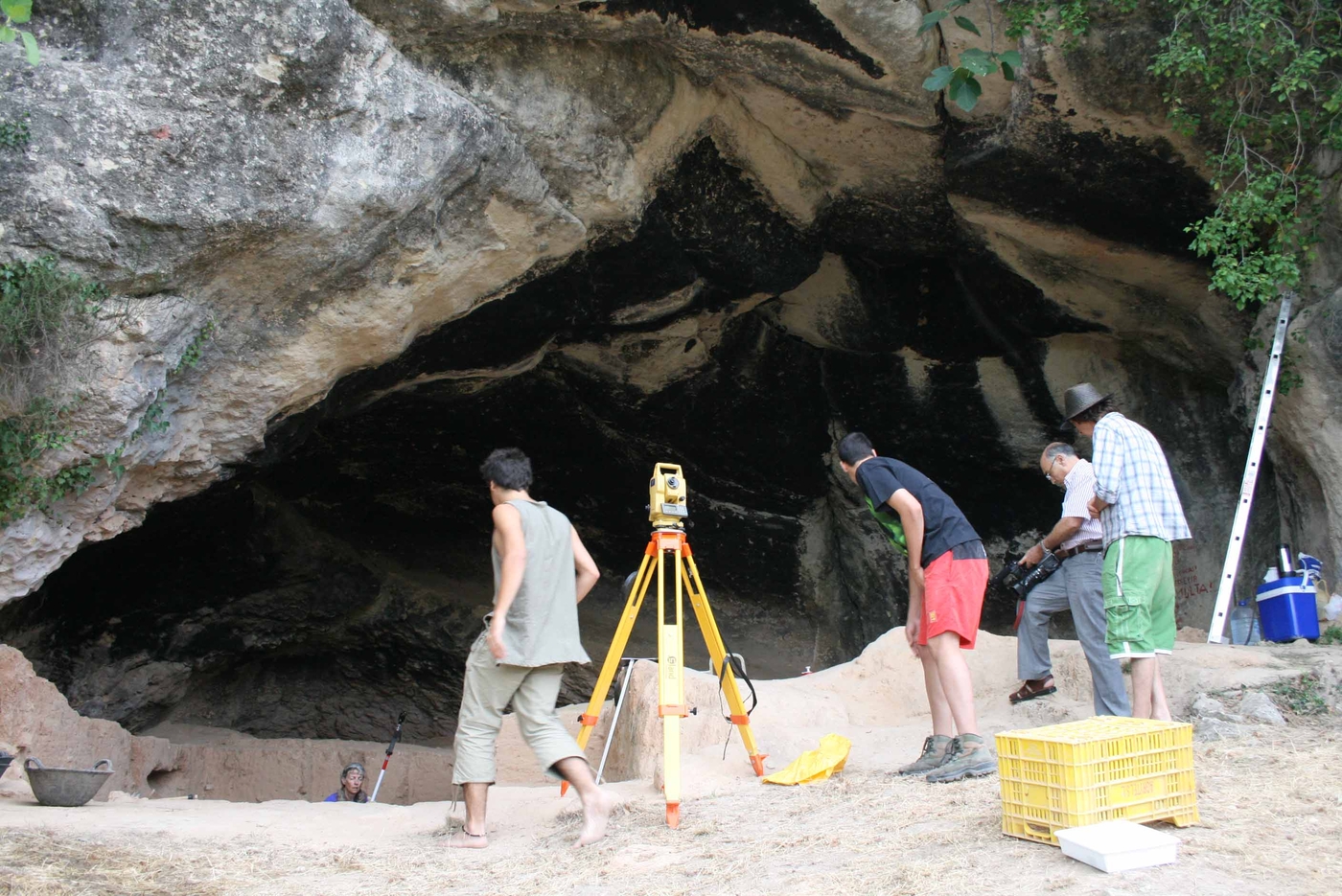
The strategic and natural advantages of Caravaca de la Cruz have attracted the attention of settlers for more than 800,000 years, the Cueva Negra yielding remains of Homo Heidelbergensis, forbears of the Neanderthals and the municipality also houses important archaeological remains from the Argaric, Iberian and Roman cultures. many of these can be seen in the Municipal Archaeological Museum.
 As a border town caught between the Catholic forces of Castille and the last remaining Moorish stronghold in Spain, Granada, Caravaca had a turbulent medieval history, but it was during this period that the legend of the Cross of Caravaca was born, bringing the religious orders which shaped the structure of Caravaca today, with its impressive hilltop castle and eclectic collection of churches and monasteries, religious tourism today being a backbone of the town´s economy.
Caravaca de la Cruz is a municipality with important natural resources, including extensive forests, part of which have protected status due to their wealth of flora and fauna, and due to the abundant water supplies is also a major area for canned fruit production, apricots in particular being an important crop.
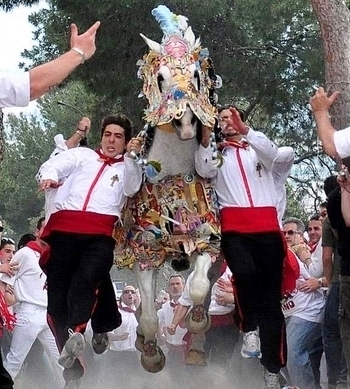
 Caravaca is renown for its important May Fiestas, held in honour of the Vera Cruz, which also incorporate the Moors and Christians celebrations and the Running of the Wine Horses.
Caravaca de la Cruz is also the home of Europe´s largest collection of ethnic instruments at Barranda, the Museo de Música Étnica Barranda and is the location of the Barranda festival de Cuadrillas, which celebrates the Region's ethnic music traditions.
The municipality is home to around 26,000 inhabitants and shares boundaries with Moratalla, Cehegín, Lorca, Puebla de Don Fadrique in the province of Granada and Vélez-Blanco in the province of Almería.
Tourist office opening times:
Weekdays: 10.00 to 14.00 and 16.30 to 19.30
Saturdays: 10.30 to 14.00 and 16.30 to 19.30
Sundays and public holidays: 10.30 to 14.00
Click for map, Caravaca de la Cruz Tourist Office