







- EDITIONS:
 Spanish News Today
 Murcia Today
 Alicante Today
Spanish News Today Editors Roundup Weekly Bulletin Jan 16
TOP STORIES: "Mandatory January 2 electric scooter insurance shelved in Spain" & "Spain grants grace period for V-16 beacons"
Happy New Year, everyone! This is our first Spanish News Today Editor’s Roundup Weekly Bulletin since we came back after the Christmas/New Year/Three Kings break, and a few things have changed since we last spoke…
The insurance for those two-wheel electric scooters which was supposed to be mandatory as of January 2 has been delayed because the system wasn’t fully ready yet, and similar backpedalling and prevaricating has gone on with the V-16 flashing lights for your cars. Surprise, surprise.
There are some things that don’t change, however, like the glut of quality news stories we’ve got for you from around Murcia, Spain, Alicante and Andalucía, which we will continue to deliver in 2026.
Here we go!
Scoot over
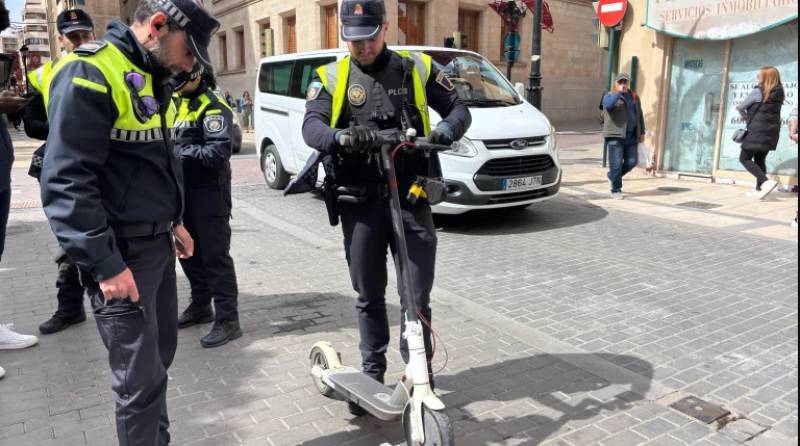
Spain’s e-scooter riders got a bit of an unexpected late Christmas present from the DGT when the mandatory insurance scheme got pushed back as, shock horror, the government’s computer system isn’t ready. Cue collective sighs of relief from more than 500,000 scooter owners who’ve already emptied their wallets over the festive period, and disgruntled grunts from anyone who doesn’t ride one.
The new law was supposed to come into force on Friday January 2, forcing anyone with an electric scooter to get insurance just like cars and motorbikes. The logic was sound enough: if you crash into someone or smash up their property, there needs to be insurance money to cover it. But there’s a problem. The national registry where all these vehicles are supposed to be logged doesn’t actually exist yet.
The royal decree that was meant to get the whole thing off the ground is still stuck somewhere in the bureaucratic pipeline and even though they’re treating it as urgent, it’s not going to be ready until the end of January at this stage. Without a working registry, they can’t enforce the insurance requirement.
There is one caveat though. If you’ve got one of the more powerful scooters, anything over 25 kilos or capable of speeds above 14 kilometres per hour, you still need to get insured by January 26. No registry, no excuses.
In the meantime, there’s a temporary bodge in place. The Insurance Compensation Consortium will cover personal injuries from uninsured scooters, but if one crashes into your car or damages your property, you’re out of luck. Material damage isn’t included in the emergency arrangement.
Expect us to revisit this in a couple of weeks’ time.
V-16 for Vendetta
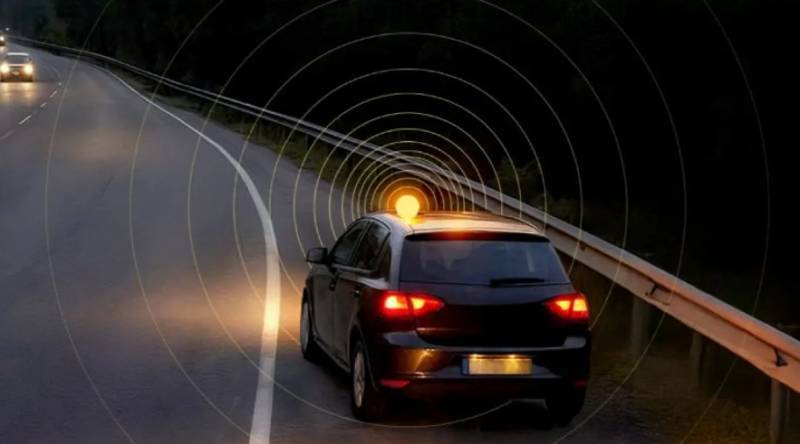
Spain’s new mandatory V-16 emergency beacon was supposed to make life easier and safer for drivers, but honestly, it’s all turning into an absolute shambles. The devices became compulsory on January 1, replacing the old warning triangles, and they’ve already racked up concerns about fire risks, security threats and now health dangers for drivers with pacemakers.
The latest worry involves the magnetic attachment system used by most beacons. Those magnets can interfere with pacemakers and implantable cardioverter-defibrillators (ICDs), the devices that keep heart patients’ rhythms in check. One woman who’s had a pacemaker for nearly 10 years says she feels abandoned by the regulations. Her doctors have told her not to use the V-16, but she usually drives alone and has no idea what to do in an emergency.
The Spanish Society of Cardiology has tried to calm things down, saying the beacon would need to be placed very close to the chest to cause problems. They’ve issued guidelines suggesting drivers keep the device at least a hand’s width away from their pacemaker, handle it with the opposite arm and get someone else to deploy it if possible.
Experts recommend that pacemaker patients choose beacons with suction cup mounts instead of magnetic ones if at all possible.
Then there’s the security nightmare, which probably occurred to the motorists themselves months ago but only seems to be dawning on the authorities now. The Guardia Civil has warned that the beacons could actually make stranded motorists sitting ducks for thieves and criminals.
The devices automatically send your exact location to the DGT, but that information is available in real time on a public website. Break down on a quiet country road at night and anyone with bad intentions could find you.
Guardia Civil representatives say the system is compromising public safety by openly broadcasting where vulnerable drivers are stuck, often in the middle of nowhere and they’re calling for a complete review.
However, true to form, Minister for the Interior Fernando Grande-Marlaska has dismissed the concerns, insisting the beacon makes things safer because traffic authorities automatically know where broken-down vehicles are and can alert units.
The Unified Association of Guardia Civil is taking a more measured approach, saying they don’t want to create alarm since no robberies have been reported yet, but they’ll be watching closely.
What does worry them is dodgy tow truck operators exploiting the system. With your location publicly visible, pirate recovery services that haven’t been properly arranged could show up at breakdowns and confuse drivers into handing over their car without proper paperwork. You could end up being €200-300 out of pocket because your insurance won’t cover an unauthorised tow.
The AUGC suggests the geolocation should be limited to a two- or three-kilometre radius so only nearby vehicles can see it, rather than being visible nationwide. As one coordinator put it, there’s no sense in someone in A Coruña being able to see a beacon in Madrid.
At least drivers who haven’t bought one yet won’t get fined immediately. Grande-Marlaska confirmed there will be a grace period where officers will focus on providing information rather than issuing penalties, although he wouldn’t say how long that will last.
He stressed the change is about safety, pointing out that around 25 people die each year trying to place warning triangles on Spanish roads.
The minister claims that around 3,000 drivers are already using the beacons daily and that uptake is increasing, but there are no official figures on how many people have actually bought them.
Spain is the first country to roll out the V-16 nationwide, with several European countries watching to see how it goes before deciding whether to follow.
If you drive in Spain and you haven’t got one already, you really should go out and buy one now.
Renfe your life

From the tarmac to the tracks, Spain’s new €60 Single Transport Pass went on sale on Monday January 12, giving travellers unlimited trips on state-owned buses and trains for 30 days. The pass officially kicks off on Sunday January 19, but you can already grab one at ticket offices, self-service machines or through operator websites and apps.
If you’re 26 or under, there’s an even better deal. Anyone born on or after January 1, 2000 can get the Youth Single Travel Pass for just €30 after registering for free on the Ministry’s website. The pass covers Renfe’s Cercanías and Rodalies commuter trains, Media Distancia services, regular state-run buses and some AVANT high-speed routes, including Ourense to A Coruña, Madrid to Salamanca, Alicante to Murcia and the Avant Express from Barcelona to Tortosa.
There are sensible rules to stop people taking the mick. The pass is personal and non-transferable, so you’ll need your DNI or NIE with you at all times. For buses, you can only book one trip per direction each day, though some companies might allow two if your journey is particularly short.
Train rules are stricter: you can’t connect consecutive services if the gap between departures is less than 180 minutes or less than three times the duration of the first journey, and you can’t make more than four round trips with seat reservations in one day.
The Ministry remembers what happened back in 2022 when free and discounted season tickets led to a flood of ghost bookings that left regular commuters unable to get seats. This time they’re not messing about. Lend your pass to someone else, book trips and not show up without cancelling, make unauthorised multiple reservations or use the youth pass when you don't qualify and you could face a temporary ban or lose your discount code entirely.
Get your pass blocked and you lose the money you paid plus you can’t get a new one for 60 days. Young people who misuse the service more than 20 times will have their pass blocked and lose the discount altogether.
Smart money’s on property

It might seem early, but the 2026 income tax return (Declaración de la Renta) kicks off in early April, and homeowners are already on the lookout for ways to trim their bills this year, namely thanks to the deductions that are available for energy efficiency upgrades on your main home or even rental properties.
These existing incentives, which have been extended to the end of this year, let you claim up to 60% back on qualifying residential renovations or 20-40% for single-family homes, provided you get an official certificate showing at least a 7% improvement in energy performance.
2026 also brings another smart money move thanks to direct help through subsidies that could cover up to 80% of your home improvement costs. The State Housing Plan 2024-2030, which is now in full swing with €7 billion allocated, pairs nicely with extended tax breaks from European funds for greener, more accessible homes.
The big draws for homeowners are, basically, the grants which are managed by each autonomous community, scaling with your energy savings: up to €6,300 (40% of costs) for 30-45% improvement, €11,600 (65%) for 46-60%, and a whopping €18,800 (80%) for over 61%, or even €21,400 if there’s economic vulnerability at home. You’ll need before-and-after energy certificates proving at least 30% savings or an A/B rating, and tax deductions sweeten the pot too.
NextGenerationEU funds offer 40-80% non-taxable aid regionally, and don’t overlook local schemes for things like solar panels, insulation, elevators or asbestos removal.
There are also other areas where savings on income tax can be made this year, including certain family circumstances and spending on sustainability efforts, so do have your asesor look into whether any of it applies to you. With a bit of planning now, you could hand less over to the taxman come spring.
Murcia
In Murcia recently, the Castillo de Monteagudo hilltop fortress that looms over the centre of the Region was the site of a real spectacle when Austrian wingsuit pilot Lukas Loibl turned it into the backdrop for one of his daring flights.
Wingsuit flying, also known as wingsuiting, is the sport of skydiving using one of those special suits that has webbing between the legs like a flying squirrel that lets the user glide through the air. Kind of like Batman.
Loibl, who lives in Murcia, is an adept at the sport and he was struck by Monteagudo’s dramatic rise above the valley, so he decided to show it from a perspective few will ever see. Reaching speeds of more than 200 kilometres an hour, he flew close to the castle, passed beneath the outstretched arm of the iconic Christ statue and skimmed along the ridge before landing safely in a designated area.
See the video here:
Also flying high are the latest passenger figures from Corvera Airport. (Come on, you know we can’t resist an update on this every couple of months!) Murcia’s airport closed 2025 with just under one million passengers, meaning that, despite all the doomsaying, it ended up being another consecutive year of steady growth.
To drill down, nearly 950,000 travellers passed through the terminal in 2025 – a rise of 4.3% on 2024 – with international routes doing most of the heavy lifting. While domestic passenger numbers within Spain dipped, overseas travel climbed by almost 7%, showing that they really should be focusing more on international destinations rather than the Canary Islands.
Of course, we all know that the airport remains some way behind the peak volumes once seen at the old San Javier airport, but it’s promising to learn not only that the direction of travel (pun intended) is clear, but also that investment in operations continues apace quietly behind the scenes…
There is a downside to all this though, it must be said. Air travel is obviously an incredibly polluting form of transport, and that is especially worrying for Murcia, where environmental group Ecologistas en Acción recently released a report that found that Murcia city is among the top five cities in Spain with the worst air quality when it comes to nitrogen dioxide levels, and Cartagena is not far behind.

Using data from official monitoring stations, the analysis found that both cities exceed the stricter NO2 limits the European Union plans to enforce by 2030. Granted, the majority of this pollution comes from cars, not planes, with Ecologistas en Acción pointing to the absence of traffic-focused monitoring stations in Cartagena as a real worry.
Apparently, plans for expanded monitoring and a new Air Quality Strategy are in the works, but it’s still unsettling to think that little ol’ Murcia is just behind Madrid and at the same level as Barcelona when it comes to air quality. Must do better.
Finally, just this week, the news emerged that more than 2,000 holiday homes across the Region of Murcia have been blocked from appearing on platforms such as Airbnb and Booking.com after failing to meet the government’s new registration requirements.
A rush of applications for Rental Registration Numbers has revealed just how tightly the net is now being drawn. In many cases, properties are falling foul of community rules that prohibit them being used for tourist rentals, or lack the required authorisation from other owners.
Expect the enforcement of these new short-term rental rules that began in 2025 to step up a gear this year, not only in Murcia but nationwide – especially good advice for anyone who rents out/wants to rent out their property in Spain to tourists for part of the year. Make sure you have all your ducks in a row asap!
We finish our Murcia section, as ever, with some ideas for things to do in and around the Region. Once Christmas is packed away, January and February can sometimes feel a bit flat, but Taquilla Tickets – a family-run events and tours company run by husband and wife Sally and Nigel – has spent over six years creating memorable days out for the English-speaking community in Murcia.
For the next couple of months, they’re most exciting programmed tours include a tour and tasting trip to the Estrella brewery just on the outskirts of Murcia city, added by popular demanded; a trip to see Mamma Mia! in Alicante; a peaceful visit to Calasparra and its sanctuary with lunch included; a tempting three-day break in Granada with optional flamenco, Alhambra or Sierra Nevada excursions; and a bus to go down and witness the unmatched vibrancy and energy of the Águilas Carnival. Book your trip today!
Be sure to see our EVENTS DIARY for more events and activities coming up soon in and around the Region of Murcia:
Spain
It looks like Spain’s tourism boom might finally be running out of steam. After years of post-Covid growth that saw the sector expand by 10.5% in 2023 and 5.5% in 2024, the industry closed 2025 with a much more modest 2.5% increase.
For the first time since the pandemic, tourism grew slower than the overall Spanish economy, which the Bank of Spain reckons hit 2.9%.
The numbers from tourism alliance Exceltur show a clear shift towards what they’re calling a normalisation process. Visitor numbers from Germany dropped 3.4%, France fell 1.1%, the Netherlands was down 3.9% and Italy slipped 1.3%.
The UK picked up some of the slack as usual with a 3.2% rise, along with Portugal at 6.2% and Ireland at 5.6%.
 Here’s the silver lining for the tourism sector though: foreign tourists spent 7.9% more in 2025, far outpacing the 3.4% increase in arrivals and the 1.4% bump in overnight stays.
Basically, people are taking fewer and shorter trips but splashing more cash each day they’re here, perhaps due to increased prices, which has helped hotels and restaurants cope with fewer bodies coming through the door.
Tourism GDP hit €218,459 million last year, now accounting for 13% of Spain’s entire economy. That’s the highest share on record and cements tourism as the country’s main economic engine.
Forecasts for 2026 predict 2.4% growth, slightly better than the wider economy, although analysts reckon it’ll come from higher spending rather than visitor numbers. Long-term, there could be problems if travellers view Spain as more expensive and a less attractive option than it traditionally has been. Industry experts are also keeping an eye on international uncertainty, particularly whatever’s happening with the US administration.
They assert that the sector isn’t in trouble, it’s just maturing, and that the challenge now is adapting to a market where success depends less on volume and more on strategy, especially as customers get pickier about where they spend their money.
Meanwhile, the housing market is showing no signs of calming down. After closing 2025 with double-digit increases, every forecast for 2026 points to more price rises, this time above 6%.
According to idealista, second-hand home prices jumped 16.2% in the last three months of 2025 compared to the same period in 2024. That’s the biggest increase since the housing bubble burst and pushed the average to a record €2,639 per square metre, or roughly €198,000 for a 75-square-metre flat.
The Ministry of Housing’s official stats paint a similarly grim picture, with an average appraised value of €2,153 per square metre in the third quarter. That’s higher than the previous peak of €2,101 per square metre in early 2008, with a year-on-year hike of 12.1%.
 Raymond Torres, director of Economic Analysis at Funcas, reckons last year’s double-digit jump was a peak that ‘probably’ won’t be repeated in 2026, though he admits housing prices are no longer within reach of most middle-class buyers.
Everyone agrees the problem is supply and demand. Spain’s population has grown by three million since 2019, but housing construction has only met half the annual demand. Between January and September 2025, just 100,327 building permits were granted for new flats, up 5.6% from 2024.
CaixaBank estimates 150,000 permits for 2026, about 10,000 more than last year, but nowhere near the 600,000-home deficit the Bank of Spain says exists.
Part of the reason Spain’s population keeps growing is that more and more people want to live here, even as the planet gets uncomfortably hotter. As we put 2025 in our rear-view mirror, it’s officially gone down as the second warmest year ever recorded globally, beaten only by 2024 and running neck and neck with 2023.
The European Union’s Copernicus Climate Change Service says the average global temperature landed around 1.48°C above pre-industrial levels, uncomfortably close to the 1.5-degree threshold scientists have been warning about for years.
What’s particularly alarming is that this happened during a La Niña year. Normally this natural climate pattern cools things down by lowering temperatures in the equatorial Pacific, but in 2025 it barely made a dent. Month after month, temperatures stayed stubbornly high, with many months ranking among the three warmest ever recorded for their time of year. This wasn’t a single freak heatwave but a relentless build-up of warmth that refused to shift.
The main culprits are the usual suspects: carbon dioxide, methane and nitrous oxide from burning fossil fuels, deforestation and heavy reliance on oil and gas. All that extra energy has to go somewhere and most of it ends up in the oceans, which absorb more than 90% of the excess heat. Eventually that heat leaks back into the atmosphere, which explains why air temperatures keep rising even in supposedly cooling years.
Europe endured deadly heatwaves over the summer with an estimated 16,500 deaths linked directly to extreme heat. Cities baked through tropical nights and drought and wildfires gripped parts of the Mediterranean, including Spain.
The uncomfortable takeaway is that natural climate patterns like La Niña are no longer enough to counterbalance human-driven warming. Even when nature tries to cool things down, the heat keeps winning. Every tenth of a degree increases the risk to human health, food security and ecosystems.
Alicante
Two major new desalination plants are moving closer to reality after the Confederación Hidrográfica del Segura (CHS) signed contracts to draw up initial designs for facilities in Torrevieja and Águilas. Together, the plants could supply up to 150 cubic hectometres of water per year.
The planning stage will cost around €1.34 million and is expected to take about a year, though the CHS warns that environmental studies and public consultation could push this timeline back before the project reaches the bidding stage.
The Águilas plant will produce 50 cubic hectometres of desalinated water annually and will mainly supply the Region of Murcia. The Torrevieja facility will be twice the size at 100 cubic hectometres per year and will serve Alicante province as well as the Campo de Cartagena.
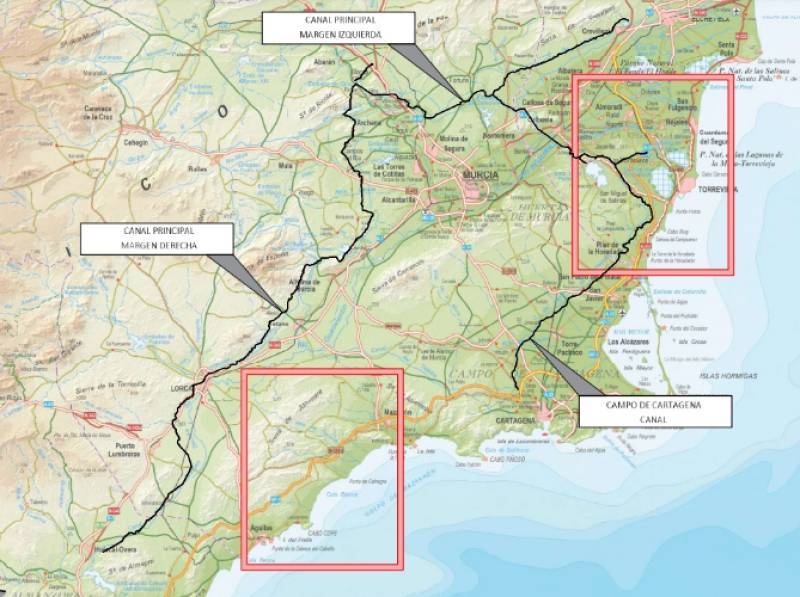 According to the CHS, both plants are desperately needed to tackle water shortages caused by reduced irrigation allocations from the Tajo-Segura transfer and to ease the heavy overexploitation of underground aquifers across connected areas.
Most of the water from Águilas will be used to relieve pressure on severely overexploited aquifers across southern Murcia, including Sierra Espuña, the Guadalentín basins, Mazarrón and Águilas, with some reaching Bullas through water swaps. The remaining supply will go directly to towns facing shortages, including parts of Almería and municipalities like Lorca, Totana, Alhama and Librilla, with additional support planned for reservoirs like La Cierva through exchanges.
In Torrevieja, more than half the plant’s output will tackle water shortages in the Campo de Cartagena, La Pedrera and several zones of the Tajo-Segura transfer system. The rest will recharge or replace water taken from overexploited aquifers in coastal and inland areas, including Cabo Roig, Torrevieja, Sierra de Cartagena and Campo de Cartagena.
The exact locations haven’t been finalised yet. The CHS says the Águilas facility must be built on the southern coast of Murcia, and the Torrevieja plant will sit somewhere on the coast near the La Pedrera reservoir.
Meanwhile, British travellers heading to and from Alicante were thrown into chaos on Tuesday this week after heavy fog brought the airport to a standstill and forced airlines to reroute planeloads of passengers to alternative Spanish destinations.
The Costa Blanca was shrouded in extraordinarily thick mist from first light, making it impossible for pilots to land safely at Alicante-Elche Miguel Hernández airport. By mid-morning, 18 planes had been sent elsewhere, including eight that had taken off from cities across the UK.
TUI diverted five of its UK services to Ibiza, affecting people who’d boarded in Cardiff, East Midlands, Glasgow, Manchester and Newcastle. EasyJet scattered its passengers across eastern Spain, landing one Birmingham flight in Valencia and sending planes from Gatwick and Belfast to Murcia.
Around 1,200 UK passengers found themselves landing somewhere other than planned, with roughly the same number stuck at Alicante waiting for delayed departures back to Britain. Those finally leaving the Spanish airport faced hold-ups of about two hours.
Finally, a 39-year-old man has been arrested in Alcoy by the National Police on charges of fraud and damage after allegedly renting industrial warehouses and plots to dump dozens of tonnes of used clothing instead of managing it environmentally as promised. One of those sites was in Orihuela.
The case came to light when the owner of the Orihuela warehouse reported him for not paying rent. She’d leased the space to someone who presented himself as being involved in buying, selling and exporting textiles. When he stopped paying and she couldn’t reach him, she visited the site and found it had been turned into an uncontrolled dump for used clothing. Trucks were still arriving on his instructions to unload more items he’d been charging others to recycle, only to abandon them in rented spaces.

Police found he’d defrauded at least two other people in the area with the same scheme. The clean-up costs are eye-watering. Treating each tonne through authorised companies costs between €100 and €200, with transport running about €1,000 per truck. The Orihuela owner reckons it’ll need more than 50 trucks for her site alone, totalling around €120,000.
Officers tracked down and arrested the suspect in Alcoy, where he’d reportedly been at it again. He was brought before the duty magistrate’s court and the investigation continues into a possible environmental crime.
Andalucía
In Andalucía, Doñana, that precious wetland cherished by so many, is still under the weather despite a decent spell of rain last year. The Guadalquivir River Basin Authority reported 671 millimetres of rainfall in the 2024 to 2025 hydrological year, which was 123% of average and snapped a thirteen-year dry spell.
But experts say one wet year isn’t enough to turn things around. The real headache is over-extraction from the aquifer, mainly for strawberries that rake in over a billion euros annually. Three of the five water bodies are in poor shape, and the authority warns that current use “compromises their good condition and that of dependent terrestrial ecosystems”.
Government plans include no new irrigation land, closing illegal intakes, and shifting nearly 20 cubic hectometres of water from elsewhere.
Adding fuel to the fire, a new boundary proposal to class 119 kilometres of marsh as public maritime-terrestrial domain has scientists up in arms. The Doñana Participation Council rejected it outright, with Eloy Revilla of the Doñana Biological Station stressing, “Its greatest value is that it’s freshwater. We must do everything possible to maintain this state of conservation.”
A manifesto from 275 scientists fears “irreversible consequences” if freshwater marshes are lost.
 Over in Málaga’s Mijas, a Saturday afternoon shootout on January 10 had the town’s Policía Local earning their stripes. Five patrols raced to an overturned car, uncovering what the Ayuntamiento called a “violent episode” complete with firearm threats, a high-speed chase, and shots fired.
One man took a bullet and ended up in hospital after on-site treatment, while officers nabbed two suspects now facing charges of robbery with violence, attempted homicide and drug crimes. They subsequently seized a handgun and a whopping 75 kilos of hashish found along the escape route.
Mijas councillor for Citizen Security, Juan Carlos Cuevas, praised his team, saying, “The rapid and coordinated action of the agents made it possible to control a very dangerous situation, secure the area and avoid even more serious consequences.”
In Málaga capital, restoration work on the iconic cathedral is throwing up its own set of challenges and proving to be more of a marathon rather than a sprint. Started in April 2024, the project is now a year behind schedule, with completion pushed to late 2027 and costs ballooning to €22 million.
About 30% is done, but changes like using higher fire-resistant timber, inspired by Notre Dame’s blaze, have hiked the budget by 50%. Dean José Manuel Ferrary explained, “The aim is to guarantee greater safety.”
Archaeological digs before anchoring cranes turned up “extremely interesting” finds about Málaga’s early history, while plans to restore the pediment by hand add more time. Still, officials like Andalusian ministers Carolina España and Patricia del Pozo call it “one of the most significant heritage interventions” for the leaky, near-flat roof.
Funding mixes €5.3 million from EU regional funds with private donors, focusing now on the nave, transept, new tiles, fire systems and lighting. It’s slow going, but securing this city icon for the future feels worth it.
And talking of unearthing the past, Seville’s metro diggers struck gold, or rather bones, along Avenida Doctor Fedriani in the Macarena district.
Around 40 medieval graves from the Andalusí period turned up over 50 metres of the metro’s Line 3 route, spotted by the on-site archaeology team. No drama though: Director General of Transport Infrastructure Eduardo Gutiérrez assured everyone that “the discovery of archaeological remains does not affect the pace of work,” as it’s less than 5% of this stretch.
Two teams plus anthropologists are analysing skeletons on site, with a report heading to the Regional Ministry of Culture for decisions on the remains.

You may have missed…
- Murcia photo of the month January 2026.
The LADCC competition topic of “Water” should have been a relatively easy topic to photograph for those of us fortunate to be living near the Mar Menor, Murcia. However, the members were given a very open-ended topic title with no brief which, as it turned out, provided a vast array of different interpretations. - Spain proposes increasing minimum wage to €1,221 in 2026.
The Spanish government has just proposed to unions and employers that the national minimum wage be raised by 3.1% in 2026, reaching €1,221 gross per month, paid in 14 instalments, or €17,094 per year. - Spain’s best and worst airports for delays revealed in 2025 rankings.
New figures from AirHelp, a company that specialises in passenger rights and flight disruption data, paint a mixed picture for Spanish air travel in 2025: The good news is that punctuality did improve slightly compared to the previous year; the bad news is that millions of passengers were still affected by delays and cancellations. - Elderly man stopped at Tenerife airport after trying to board plane with his wife's body.
Passengers at Tenerife South Airport were left stunned when an elderly man attempted to board a flight with his wife’s lifeless body in a wheelchair. - Are Spain’s January sales really a bargain or just clever marketing?
With Christmas over, Spain’s winter sales are now under way, drawing shoppers back into stores and online in search of post-holiday bargains. But for many shoppers the January sales feel less clear-cut than they once did, and more and more people are questioning whether the ‘rebajas’ are truly what they seem.
And there we have it for the first edition of your roundup for this year.. the first of many! Stayed tuned for next Friday’s edition.
’Til then, stay safe and happy!