










 Spanish News Today
 Murcia Today
 Alicante Today


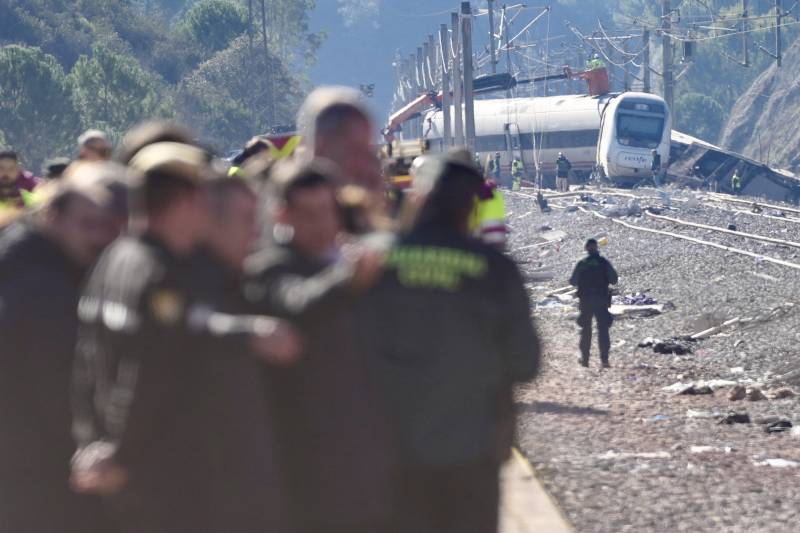 The deadly train crash near Córdoba on January 18 continues to cast a long shadow, with 46 people losing their lives and more than a hundred injured after a derailment led to a collision between two trains. The tragedy, one of the worst rail accidents in recent Spanish history, prompted widespread disruption and a suspension of high-speed services across Andalucía for weeks.
Services only gradually returned, as authorities worked to stabilise the network and begin multiple investigations into what went wrong. High-speed trains resumed operations a month later, though questions over safety and accountability remained unresolved.
Now, nearly three months on, those affected are stepping up their calls for answers.
On Tuesday, the Ministry of the Interior approved a request from the Adamuz Derailment Victims Association to hold a demonstration outside Congress in Madrid on Wednesday April 15. The group says the protest is part of a wider effort to “not forget what happened” and to ensure the truth comes to light.
Association president Mario Samper is also due to meet Adif president Luis Pedro Marco de la Peña in Madrid this week. His frustration is clear. “After two months, this gentleman hasn’t spoken to us, not offered an apology, an explanation, or anything,” he said.
The Madrid protest will be the association’s second major public action, following a march in Huelva that drew more than 5,000 people. Organisers say holding the event in the capital will allow more victims and families from across Spain to attend.
Alongside the demonstration, the group has scheduled meetings with rail authorities and companies involved in the accident, including a videoconference with the European Railway Agency and talks with Iryo representatives.
At the same time, new findings from the Guardia Civil investigation are intensifying scrutiny on the rail infrastructure. Investigators have concluded that the track likely broke around 22 hours before the accident, but no alert was triggered.
According to the report, a drop in voltage was confirmed in the area at 9.46pm on Friday January 17, indicating a possible fault in the rail. However, the signalling system did not raise an alarm because it was not configured to respond to that type of fluctuation.
“The system passively registered an electrical disturbance consistent with a break,” the report states, but it “was not configured to automatically alert”. It also notes that Adif, despite its own specifications, “did not require” the system to reliably detect such failures.
The voltage drop remained above the threshold needed to trigger a warning, meaning the track was still considered safe. Investigators say this limitation, combined with the system’s design, meant a critical opportunity to identify the fault earlier may have been missed.
While the exact cause is still under investigation, authorities have ruled out sabotage, terrorism and driver error. The focus now remains firmly on technical factors, particularly the possibility of a broken rail or faulty weld.
For the victims and their families, the findings only reinforce their determination to seek accountability. As Samper put it, the goal is simple: “to know the truth.”
Image: wikicommons
staff.inc.and
Sign up for the Spanish News Today Editors Roundup Weekly Bulletin and get an email with all the week’s news straight to your inbox
Special offer: Subscribe now for 25% off (36.95 euros for 48 Bulletins)
Read some of our recent bulletins:
Discount Special Offer subscription:
36.95€ for 48 Editor’s Weekly News Roundup bulletins!
Please CLICK THE BUTTON to subscribe.
(List price 3 months 12 Bulletins)