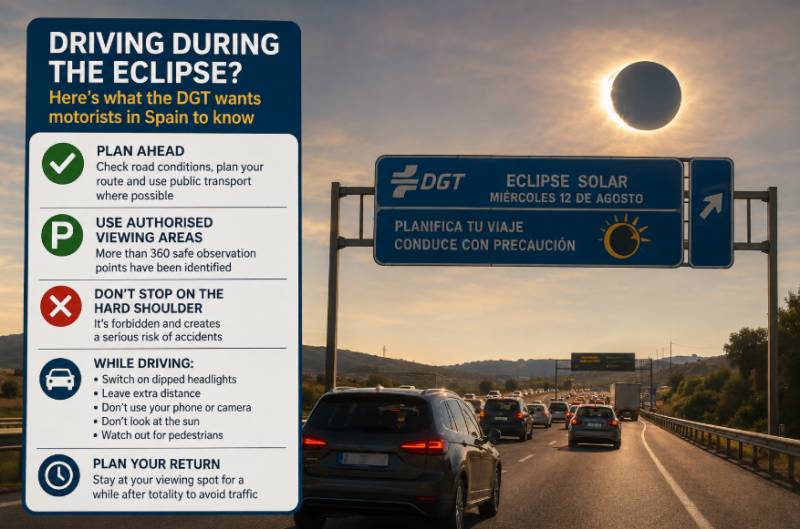
Driving during the eclipse? Here is what the DGT wants motorists in Spain to know
The DGT has issued a list of dos and don'ts for anyone driving during Wednesday's eclipse in Spain
Spain is preparing for its first total solar eclipse since 1912 and with the event falling in the middle of the summer holidays, the traffic authorities are warning drivers to plan ahead before setting off to watch it.
The Directorate General of Traffic (DGT) expects a huge rise in both domestic and international traffic heading towards the areas where the eclipse will be most visible. According to a study by the Ministry of Economy, traffic on routes towards the path of totality could increase by between 30% and 100%, adding somewhere between 400,000 and 1.5 million extra journeys to the roads.
With that in mind, the DGT, led by Pere Navarro, has put together a set of guidelines to help drivers avoid causing jams or accidents on the day.
Anyone who can watch the eclipse comfortably from home or a nearby town is being encouraged to skip unnecessary long trips altogether. For those who do need to travel, the DGT is asking drivers to plan their route in advance, check road conditions through official channels such as the 011 phone line or the Traffic Department's website, and use public transport where possible.
When it comes to actually watching the eclipse, the advice is to head to authorised or designated viewing sites with proper parking and access, rather than pulling up on secondary roads or in areas that could quickly become overcrowded.
More than 360 safe observation points have been identified across Spain's regions.
Stopping on hard shoulders or verges to watch the eclipse is strictly forbidden, the DGT pointed out, warning that doing so creates a serious risk of accidents. Drivers wanting to watch the phenomenon must leave the road entirely and park somewhere permitted.
Because the eclipse itself could prove a major distraction, the DGT has also set out a series of rules for anyone still on the road as it happens:
Switch on dipped headlights as the sky darkens, to stay visible to other drivers
Leave extra distance from the car in front and adjust speed to match conditions
Avoid using phones or cameras to take photos or videos while driving
Never wear eclipse glasses or look directly at the sun while behind the wheel, using the sun visor instead to cut glare
Watch out for pedestrians who may wander near the road at popular viewing spots
The journey home is expected to be the most difficult part of the day. While traffic on the way to viewing spots tends to build up gradually, the return trip after totality is likely to create serious congestion all at once.
The DGT is advising drivers to stay at their viewing spot for a while after the eclipse ends, rather than setting off straight away, to help spread out the traffic. Drivers are also being urged to keep an eye on temporary signs and variable message boards, and to be aware of temporary restrictions on heavy goods vehicles already announced in Catalonia, Navarra and the Basque Country.









 Spanish News Today
 Murcia Today
 Alicante Today