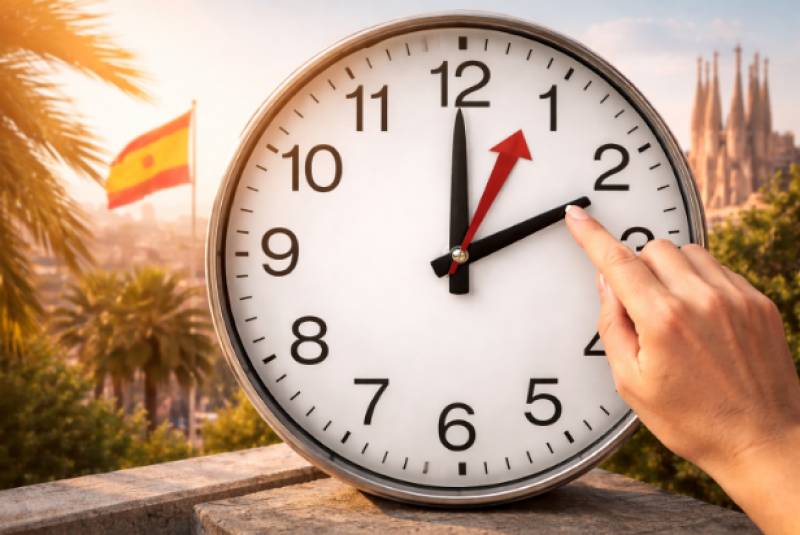
Why is Spain still changing its clocks twice a year?
Spain has wanted to ditch the clock change for years, but EU member states still can't agree on what to replace it with
Twice a year, Spain puts its clocks forward or back and twice a year, plenty of people wonder why on earth it's still happening. The practice dates back over a century, originally introduced to save coal during WW1, although in Spain it has been used continuously since 1974, when the oil crisis made reducing energy consumption a political priority.
The changes still happen on the last weekend of March and the last weekend of October, but whether they continue much longer is a question that's been doing the rounds in European politics for some time.
The European Parliament looked seriously at scrapping daylight saving time a few years ago and public consultations across the EU showed that the overwhelming majority of people would be happy to see it go. The Spanish government has also raised the possibility of eliminating it on more than one occasion.
The reason it hasn't happened yet comes down to one fairly stubborn problem, which is that EU member states can't agree on what to replace it with. The choice is essentially between keeping permanent summer time or permanent winter time, and different countries have different views depending on their location, economy and daily routines.
There are also practical concerns around transport, trade and the kind of cross-border computer systems that don't respond well to countries suddenly operating on different schedules.
The scientific case for keeping the change has also weakened considerably over the years. According to various studies, the energy savings that originally justified the whole thing are now minimal at best, largely because the way we use electricity has changed so much.
There's also growing evidence that switching the clocks disrupts sleep and affects people's health in ways that are hard to ignore.












 Spanish News Today
 Murcia Today
 Alicante Today