













 Spanish News Today
 Murcia Today
 Alicante Today

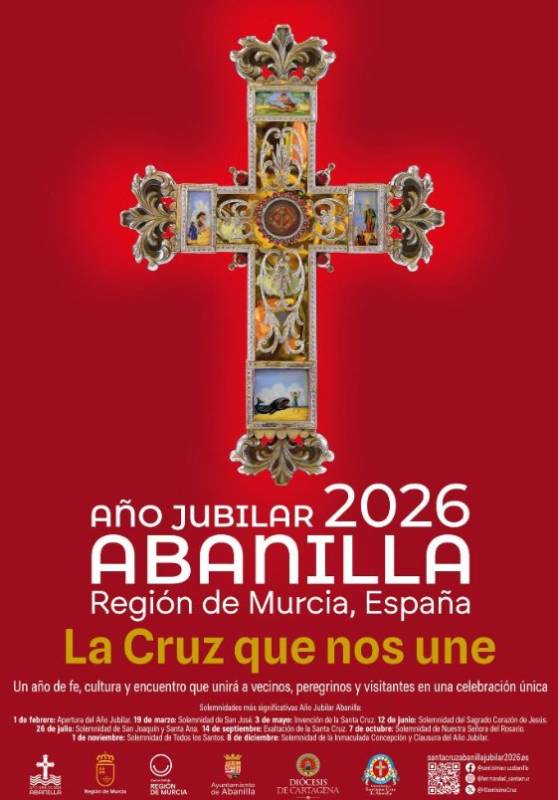
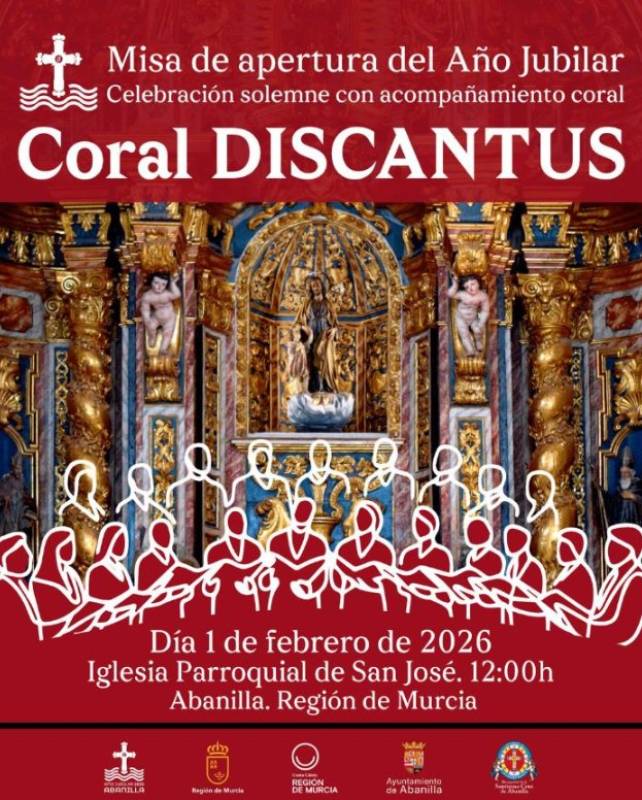 The town of Abanilla in the north-east of Murcia is celebrating a Holy Jubilee Year in 2026 to celebrate 500 years of devotion to the Most Holy Cross in the town, and the year is officially inaugurated on Sunday 1st February at the parish church of San José.
A celebratory Mass is being held by José Manuel Lorca Planes, the Bishop of Cartagena, at 12.00, with music provided by the Discantus choir.
Key dates during the year include 19th March (the feast day of San José), 3rd May (the day of the Holy Cross), 19th June (the feast day of the Sacred Heart), 26th July (reverence to San Joaquín and Santa Ana), 14th September (the Exaltation of the Holy Cross), 7th October (reverence to Our Lady of the Rosary), 1st November (All Saints’ Day) and 8th December (the feast of the Immaculate Conception and the closing of the jubilee year).
At any point in the year pilgrims can achieve a plenary indulgence (of the kind awarded to pilgrims reaching Caravaca de la Cruz every seven years) by making their way to the Parish church where the cross, which contains a “lignum crucis” (a fragment of the cross on which Jesus was crucified), is kept.
The Santa Cruz, the Holy Cross of Abanilla
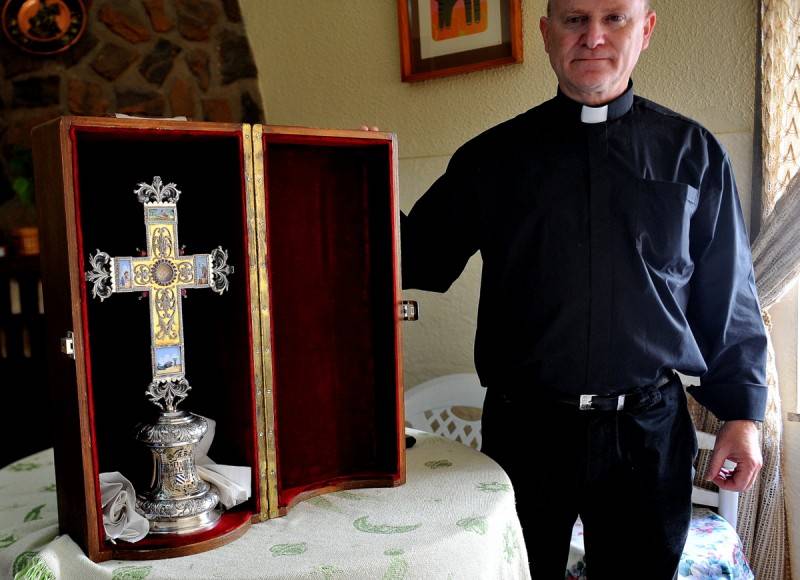 One of the defining elements in the character of the town of Abanilla and its inhabitants is the existence in the parish church dedicated to San José of a holy relic whose origins are the subject of uncertainty and legend. This relic is the object of loyal devotion among the locals even today: it plays a crucial role, for example, in the annual fiestas, and is carried on a Romería to Mahoya every 3rd May.
This relic is a “lignum crucis”, a fragment of the cross on which Jesus Christ was crucified, and it is officially recognized as genuine by the Catholic Church. The most widely accepted scholarly explanation for the arrival of part of the Holy Cross in Abanilla is that it was part of an influx of holy relics during the 17th century, following the expulsion of the Moorish converts to Christianity by Felipe III in 1614. This caused a severe loss of population in Abanilla, Fortuna and the Ricote valley, and the sudden appearance of dozens of relics coincided with the efforts of the Diocese of Cartagena to achieve a “spiritual re-conquest” of the area.
However, the installation of these relics often went hand in hand with the emergence of far less prosaic legends surrounding how they came to be in Murcia, and the Cross of Abanilla is no exception.
The legend in Abanilla is that the Cross was revealed to those working in the countryside of Mahoya – variously labourers, shepherds or the Mayor – at the site of an old, abandoned hermitage on 3rd May, and that for this reason the habit of worshipping the Cross began.
Further embellishment is added by the story that the cross had been accidentally left there by soldiers in the late 14th or early 15th century, when they left behind a leather bag containing two fragments or splinters of wood in the shape of a cross which are said to have been a holy relic belonging to the archbishop of Zaragoza. The cross was found by farmers and handed to the priest of Abanilla, who placed it on the main altar, but during the night it mysteriously disappeared.
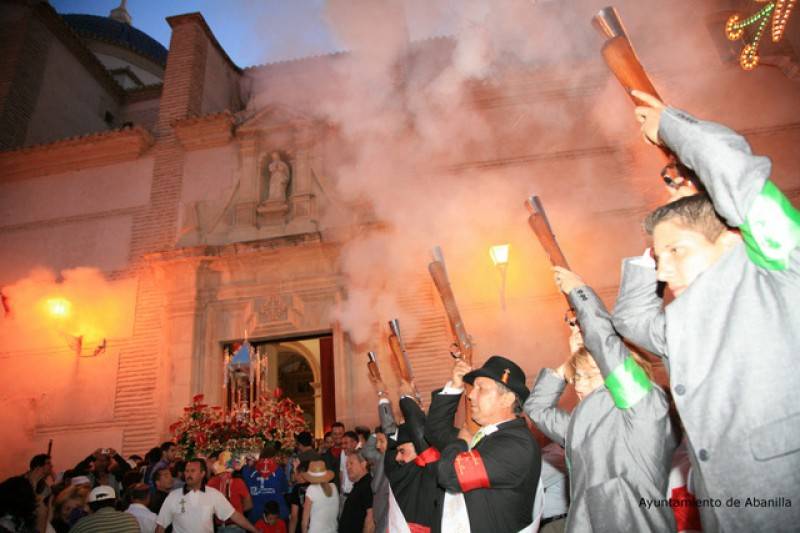 The next morning the cross was found again in the same spot where it had appeared in Mahoya, and when it was returned to the priest he suspected harmless mischief on the part of one of the congregation and again placed it on the altar. Once again, though, the relic was not there in the morning, and again it re-appeared in Mahoya in a shaft of light.
This time both the priest and the locals were convinced that there must be some religious significance to the location, and it was decided that a small church should be built in the Mahoya countryside, while at the same time the brotherhood of the Holy Cross (the Santa Cruz) was founded.
An alternative theory is that the Cross reached Abanilla through the Order of Calatrava, which governed here at a local level for centuries.
Either way, the first Santa Cruz of Abanilla was confiscated by the Mayor in 1936 at the start of the Spanish Civil War and was never seen again.
However, when the conflict ended the town sent a request to the Vatican for a replacement, and this duly arrived in a cylindrical capsule on 24th September 1939. Five years later a new reliquary, similar in design to the one which had disappeared, was completed, made from an alloy of silver, copper, zinc and nickel. This is where the replacement lignum crucis is still kept, for most of the year in the Iglesia de San José, although during the annual fiestas it visits numerous locations in Abanilla.
For more upcoming events in the Region of Murcia go to the What’s on section of Murcia Today.
staff.inc.and
 Gestoria Carvajal is an established family-owned business based in Puerto de Mazarrón and Camposol.